Reads the job context
Keep the machine, symptom, operating condition, and prior readings together across turns.
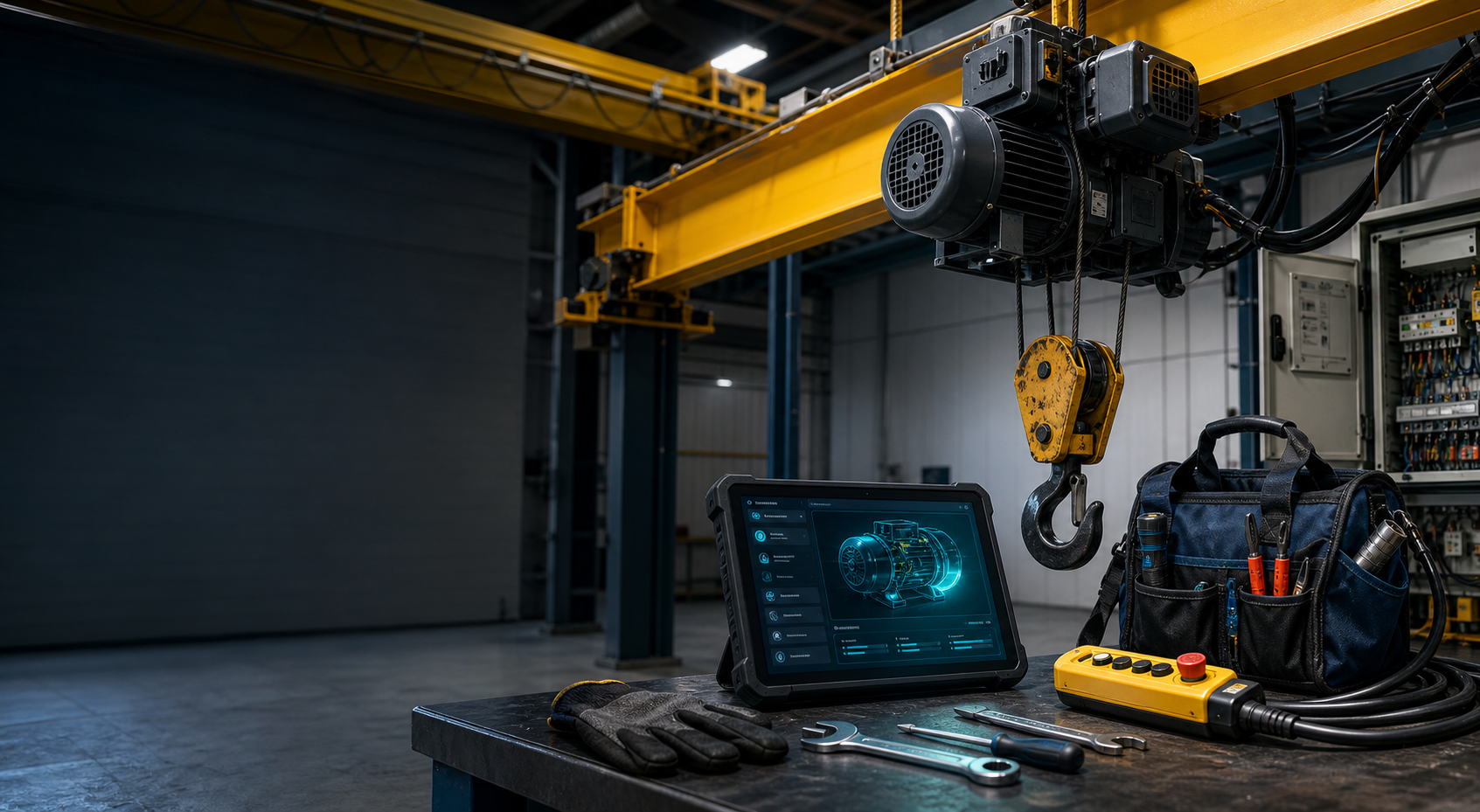
Prototype validation for crane and hoist diagnostics
LiftMate is an AI troubleshooting assistant built for overhead crane and hoist technicians. It helps guide qualified technicians through electrical troubleshooting one step at a time using symptoms, meter readings, equipment context, and structured fault-isolation logic.
Currently in prototype validation for controlled testing, internal review, and authorized pilot discussion.
What it does
LiftMate is tuned for the problems that slow crane service calls down: dead controls, one-direction travel, brake release failures, pendant faults, drive input issues, and control-power problems that need step-by-step isolation.
Keep the machine, symptom, operating condition, and prior readings together across turns.
Ask for the measurement that separates likely branches instead of guessing a part.
Final calls are grounded in readings the technician actually reported.
Saved scenarios compare behavior across versions to surface missed branches and drift.
Testing & validation
In the v4.1 reviewed first-response regression set, LiftMate passed 64 of 75 structured scenarios and averaged 6.25 out of 7. The result is useful prototype evidence, not a field-performance claim.
Workflow
Start with the machine, command, symptom, voltage class, and what still works.
LiftMate asks for the next reading or observation that best separates the fault path.
Answer each requested test so the assistant can narrow the fault path.
Use the test trail to support the next action while following site procedures.
Interactive comparison
Choose a common symptom and follow a simple, illustrative tree. Then load the same symptom into the live LiftMate demo. Watch what happens when a reading is missing or the situation needs more context.
Follow the preset yes/no questions. This is an example tree, not a manufacturer's procedure.
Start with the same symptom. LiftMate can ask for one next observation or reading and use your reply on the following turn.
The live response is generated when you send the prompt; this panel does not predict its answer.
Illustrative comparison only. A decision tree can be effective when its branches cover the case; this exercise shows where a fixed example needs an added branch. It is not a measured performance claim or a field diagnostic procedure. Qualified technicians must follow site safety procedures.
Live prototype demo
Ask questions and keep the troubleshooting conversation together.
Public demo mode uses generic chat examples only. Do not upload proprietary, customer, or manufacturer-restricted documents.
Use this when you are reporting the exact test LiftMate requested.
LiftMate's latest requested measurement will appear here after a diagnostic step.